

Top 5 Materials Used by a Modern Dental Laboratory
A modern dental laboratory works with a wide range of materials to provide patients with aesthetic, durable, and long-lasting restorations.
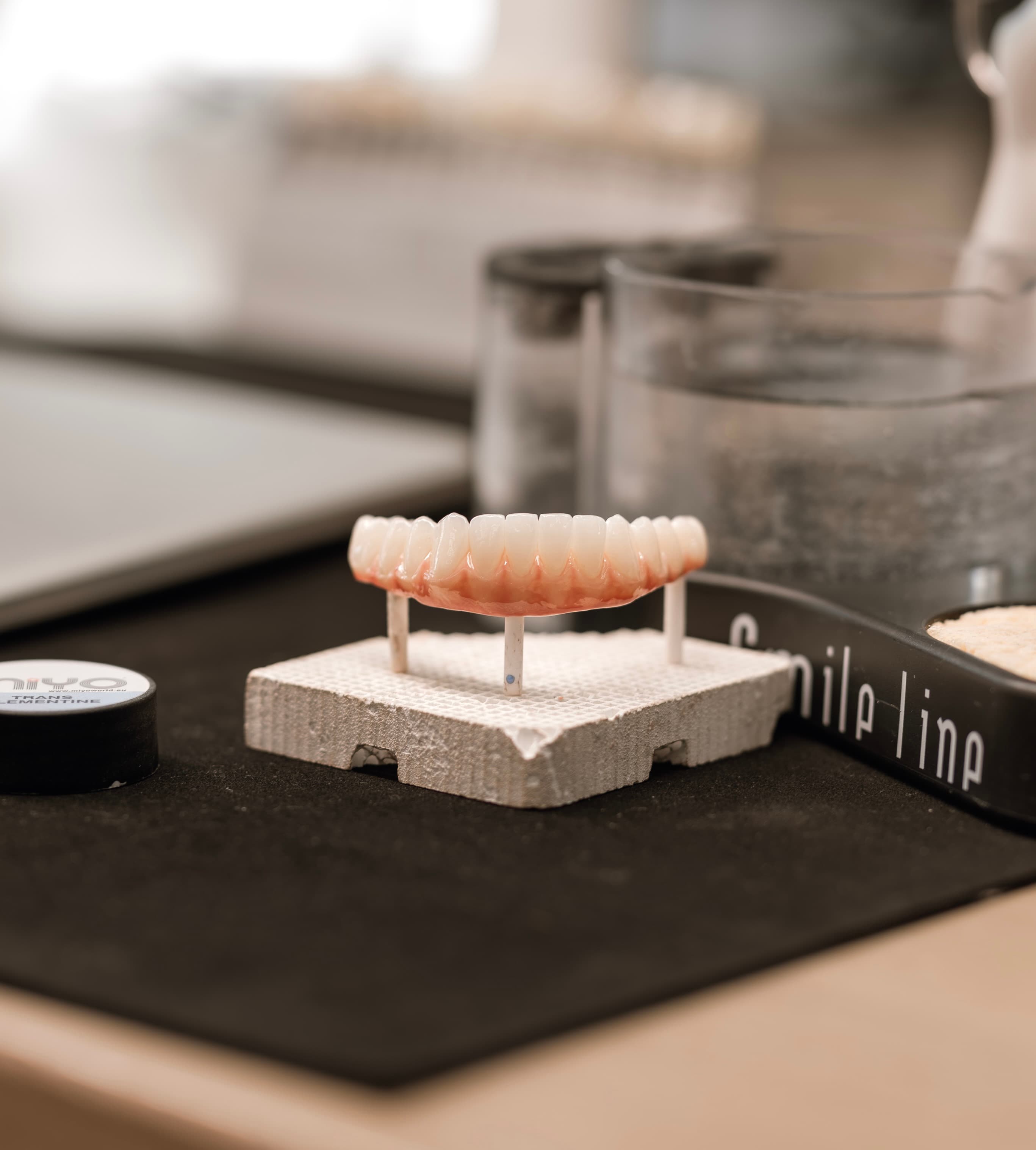
Zirconia is one of the most popular materials—it is strong, biocompatible, and allows for the creation of structures that closely mimic natural teeth. Thanks to its natural translucency, zirconia is ideal for the anterior (front) zone, as it prevents dark margins at the gumline and ensures a long-term aesthetic result.
Metal-ceramics (PFM) remain a classic choice: they are reliable and resistant to chewing loads, making them suitable for dental bridges. However, they are less aesthetic than zirconia, especially in the "smile zone."
Pressed ceramics (E-max) are characterized by high translucency and natural aesthetics. They are frequently used for veneers and single crowns where a natural-looking smile is a top priority.
Composite materials are used for temporary or minor restorations—they are quick to process, easy to adjust, and allow for achieving good results in a short amount of time.
Finally, PMMA (polymethyl methacrylate) is widely used for temporary prostheses, models, and surgical guides. The material is lightweight, durable, and easy to process, allowing for effective testing of shape and occlusion (bite) before the final restoration is manufactured.
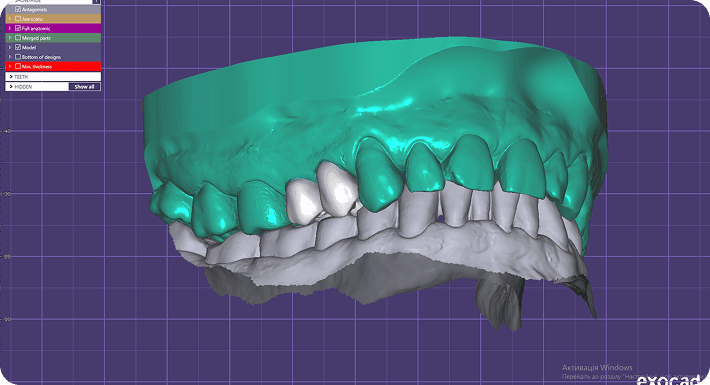
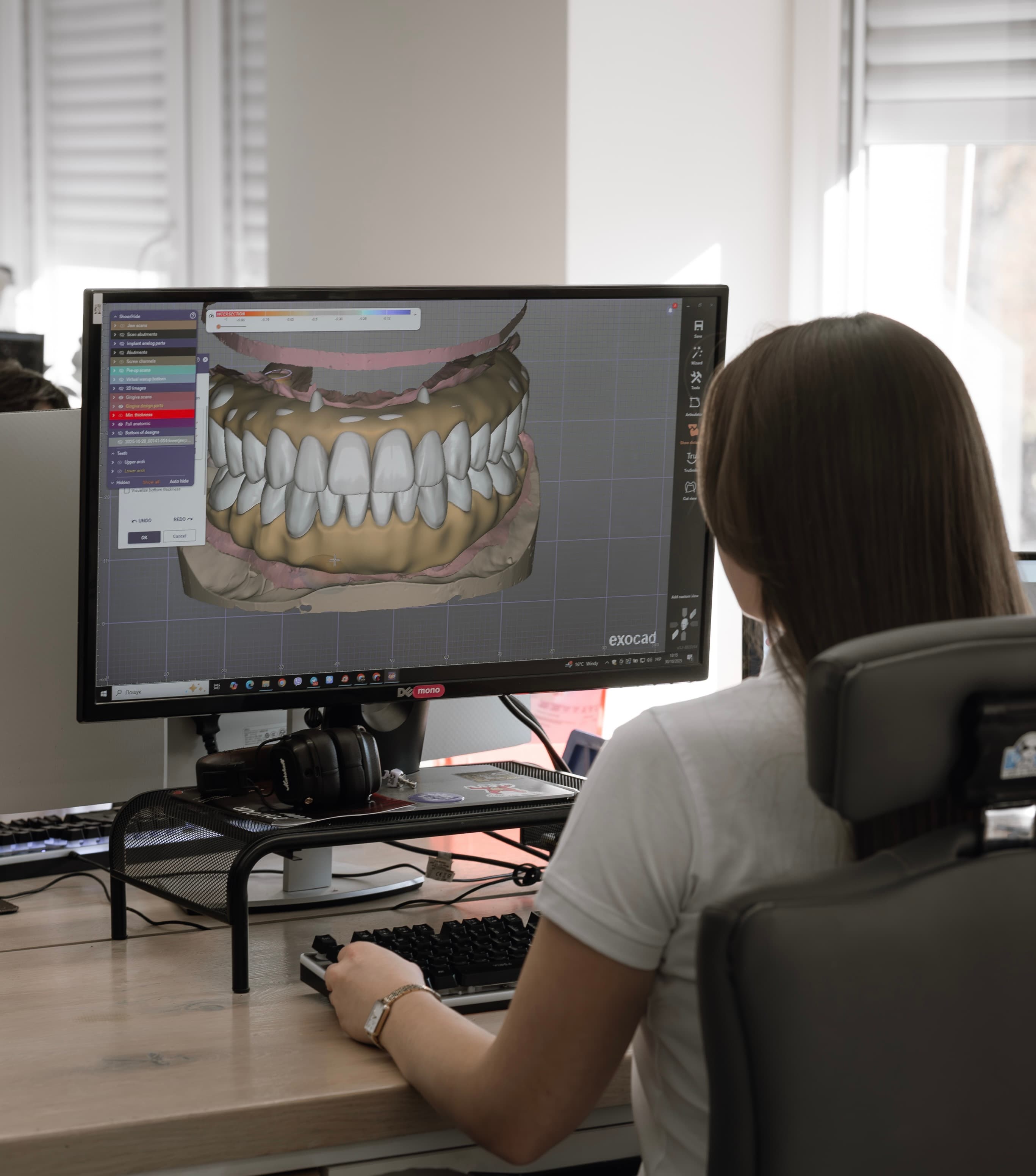
At Contour Laboratory, all these materials are used in combination with modern CAD/CAM digital technologies. This ensures high precision, a perfect fit, and consistent aesthetics for every restoration. Thanks to the professional expertise of our technicians, the use of certified materials, and digital quality control, the laboratory guarantees that every structure meets the patient's clinical needs and the doctor's expectations, providing durability and comfort in use.